
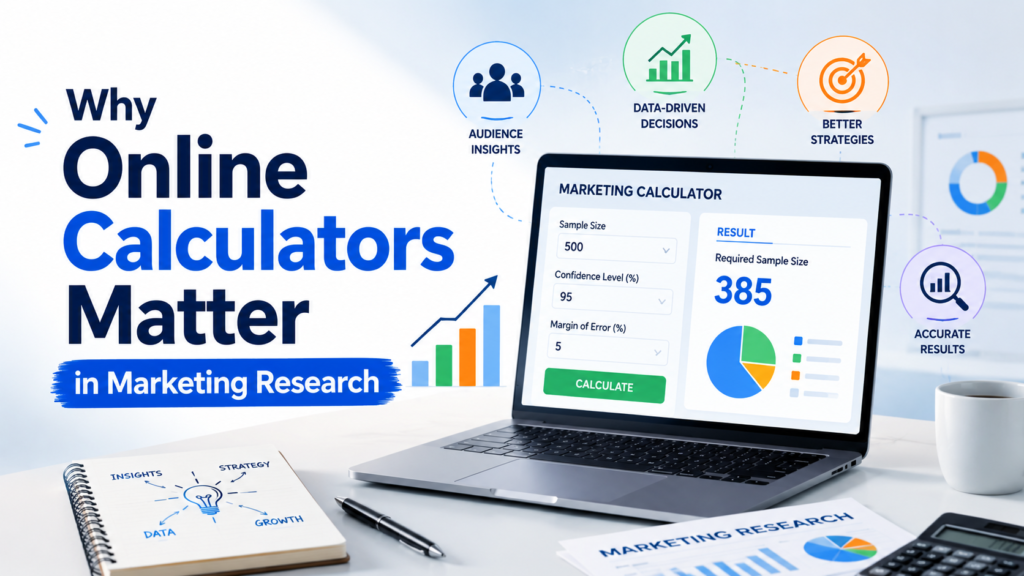
Marketing research is often associated with surveys, interviews, focus groups, and customer feedback forms. These methods remain important, but modern research also depends on interactive tools that help businesses collect practical data directly from website visitors. One of the most useful formats is the online calculator.
An online calculator is not only a convenience tool for users. In the right context, it becomes a research instrument. It helps people estimate costs, compare options, calculate savings, define needs, or understand which service level may fit their situation. At the same time, the business receives structured information about customer expectations, decision criteria, budget ranges, and common pain points.
For marketing research agencies, online calculators are valuable because they combine user engagement with data collection. Instead of asking people to fill out a long form, a calculator gives them an immediate benefit — and the answers they enter can reveal what they really need.
How Online Calculators Support Marketing Research
A calculator works especially well when customers need to understand numbers before making a decision. This may include service costs, project timelines, potential savings, order volume, return on investment, or the approximate size of a problem.
For example, a company that offers consulting services can create a calculator that estimates the scope of a project. A B2B service provider can use a calculator to help users estimate monthly savings. A local business can build a price range calculator that shows how different service options affect the final cost.
From a research perspective, this is useful because each interaction shows what users are trying to calculate. The business can learn which options people select most often, which price levels they expect, where demand is concentrated, and which combinations of answers appear repeatedly.
This type of data can help improve marketing messages, service packages, pricing logic, lead qualification, and website content. If many users select the same problem or budget range, that may become an important signal for future positioning.
Why Calculators Often Work Better Than Static Forms
Traditional forms usually ask the visitor to give information without receiving anything in return. A calculator changes this interaction. The visitor enters details because they want an answer, estimate, or recommendation.
This makes the process feel more useful and less like a request for data. As a result, people may be more willing to share information such as budget, project size, expected volume, current expenses, or preferred service options.
For marketing research, this is important. The more natural the interaction feels, the better the quality of collected data can be. Users are not simply responding to abstract questions — they are describing their own situation through the calculator fields.
An online calculator can also help identify customer intent. Someone who calculates project cost, expected savings, or service volume may already be closer to making a decision than a visitor who only reads a general page. This allows businesses to separate casual visitors from potential leads with clearer needs.
What Research Questions Can a Calculator Help Answer?
An online calculator can support many practical research tasks. It can show what type of offer users are interested in, what budget range they consider realistic, which factors influence their decision, and what kind of result they expect.
For example, a marketing research agency may recommend a calculator when a client wants to understand:
What service packages customers prefer
Which price ranges feel acceptable
How users define the size of their problem
Which features or variables matter most
What objections appear before a purchase decision
Which audience segments have stronger buying intent
How website visitors compare different options
The data from a calculator should not replace deeper research. It should be used together with surveys, interviews, analytics, and customer feedback. However, it can become a strong additional source of behavioral and preference-based information.
Example: Creating a Research Calculator With uCalc
One practical way to create an online calculator for a website is to use uCalc. It allows businesses to build interactive calculators without developing a custom tool from scratch. For marketing research purposes, this can be useful when a company wants to test a pricing model, collect structured lead data, or understand how visitors evaluate different service options.
A simple calculator can be created in several steps.
First, define the purpose of the calculator. It should answer a real user question, not just collect information. For example, “How much could your customer research project cost?”, “What survey package fits your business?”, or “How much can you save by improving customer retention?”
Second, choose the variables. These are the fields users will complete. For a research project cost calculator, the variables may include target audience size, number of survey questions, research method, reporting depth, and desired timeline.
Third, create the calculation logic. In uCalc, you can set formulas that connect user answers with the final result. The result may be an estimated price range, recommended package, project complexity level, or expected research timeline.
Fourth, add lead fields carefully. If the calculator gives useful results, it is natural to ask for a name, email, or company details before or after showing the estimate. The form should not feel too heavy. The main value of the calculator is that it helps the user first.
Fifth, embed the calculator on the website. It can be placed on a service page, landing page, blog article, or separate “estimate your project” page. For marketing research, the best location is usually where the user is already thinking about a decision.
Finally, analyze the submitted data. The calculator can show which inputs appear most often, what users want to estimate, which options are selected together, and what kind of leads come from different pages. These insights can support future research and marketing decisions.
How Businesses Can Use Calculator Data
The value of an online calculator does not end when the user receives the result. The collected data can help the business understand patterns in demand.
If many users choose a lower budget range, the company may need an entry-level offer. If most visitors select a complex service option, the website should explain that option more clearly. If users often abandon the calculator at a specific step, the form may be too long or confusing.
Calculator data can also help sales and marketing teams. A lead who submits calculator details gives more context than a lead who only sends a basic contact form. The team can see what the person is interested in, what scale of project they have, and what result they expected from the calculator.
For research teams, this creates a useful connection between website behavior and customer insight. The calculator becomes both a conversion tool and a research channel.
Best Practices for Research-Based Calculators
A good calculator should be simple, transparent, and connected to a clear business question. It should not ask for too much information at once. If the calculator feels complicated, users may leave before finishing it.
The result should also be easy to understand. A vague answer such as “we will contact you later” is less useful than an estimate, range, score, recommendation, or explanation. People use calculators because they expect immediate feedback.
It is also important to avoid treating calculator results as perfect data. The answers show user intent and self-reported expectations, but they should be interpreted carefully. For serious decisions, calculator insights should be combined with surveys, interviews, analytics, and customer research.
Conclusion
Online calculators can play an important role in marketing research because they turn website interaction into structured insight. They help businesses understand what visitors need, what they expect, which options they consider, and how close they may be to a purchase decision.
When built correctly, a calculator gives value to both sides. The user receives a useful estimate or recommendation, while the business collects data that can improve marketing, pricing, service design, and customer communication.
For companies that want to make their websites more interactive and more research-driven, tools like uCalc can be a practical starting point. The key is not only to build a calculator, but to design it around a real customer question and use the results as part of a broader marketing research process.